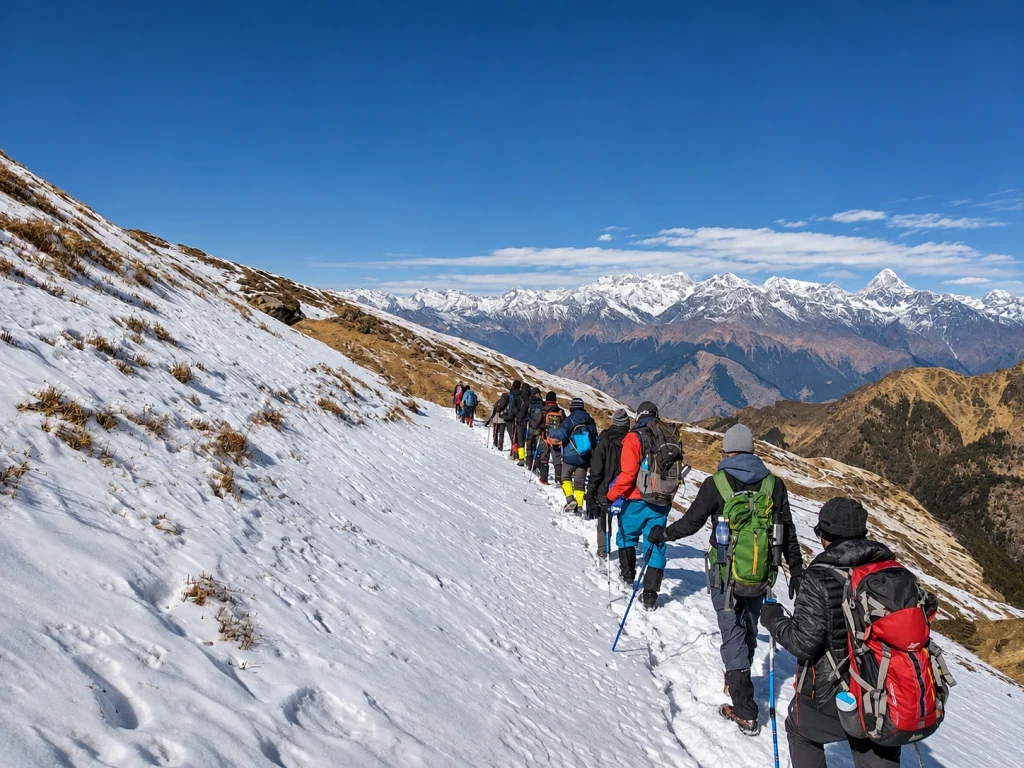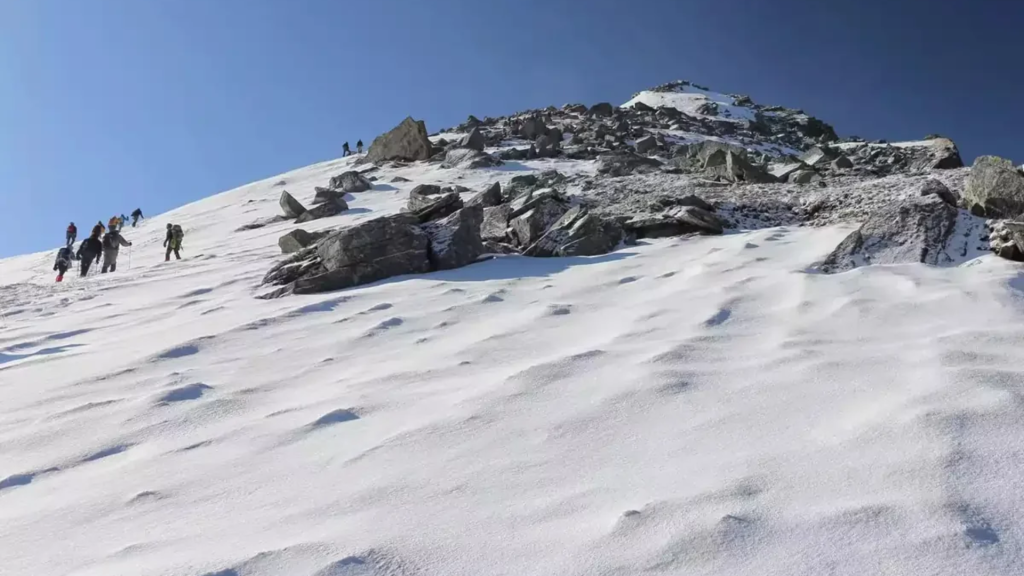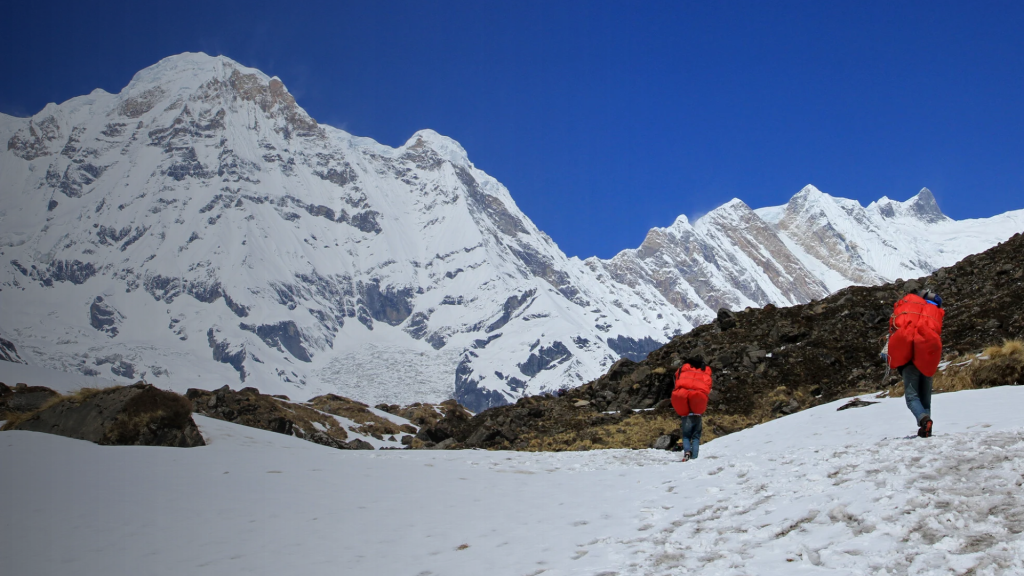

Winter trekking in the Himalayas is an unforgettable experience. Imagine walking through snow-covered forests, camping beneath a sky full of stars, and waking up to breathtaking views of snow-capped Himalayan peaks. Whether you are planning a Kedarkantha Trek, Brahmatal Trek, Kuari Pass Trek, or another winter adventure in Uttarakhand, the right packing can make your journey safer and more comfortable.
However, winter trekking comes with challenges such as freezing temperatures, snowfall, icy trails, and unpredictable weather. Packing the right equipment is essential to stay warm, dry, and prepared throughout your journey.
At The Mountain Hike, we believe that a successful begins with proper Winter Trek Packing List preparation. In this guide, we will cover everything you should pack for a winter trek in the Himalayas.
1. Essential Winter Trekking Clothing
Clothing is one of the most important parts of your winter trekking gear. Instead of carrying several bulky jackets, follow the layering system to regulate your body temperature as you walk, rest, and camp.
Base Layer
Your base layer sits directly against your skin and helps manage sweat.
Pack:
- 2 pairs of thermal tops
- 2 pairs of thermal bottoms
- Moisture-wicking underwear
Choose synthetic or merino wool fabrics that dry quickly. Avoid cotton because it retains moisture and can make you feel colder.
Mid Layer
The mid layer helps trap body heat and keeps you warm.
Pack:
- 1–2 fleece jackets or warm mid-layers
- 1 lightweight insulated jacket, depending on the weather
You can add or remove these layers as the temperature and your activity level change.
Outer Layer
Your outer layer protects you from wind, snow, and rain.
Pack:
- 1 waterproof and windproof jacket
- 1 pair of waterproof or water-resistant trekking trousers
- Waterproof over-trousers if heavy snow or wet conditions are expected
A good outer shell helps prevent cold wind and moisture from reaching your inner layers.
Warm Accessories
Never underestimate the importance of small accessories during a winter trek.
Pack:
- 1 warm woollen or fleece cap
- 1 neck warmer or buff
- 2 pairs of gloves, including warm insulated gloves
- 3–4 pairs of warm trekking socks
- 1 pair of comfortable camp socks
Keep an extra pair of gloves and socks in a waterproof bag so you have a dry backup if your main pair gets wet.
2. The Right Trekking Shoes
Your trekking shoes are among the most important items on your packing list. Cold, wet feet and poor grip can make a winter trek uncomfortable and risky.
Look for trekking shoes that offer:
- Good ankle support
- Strong grip for rocky and snowy trails
- Water resistance or waterproof protection
- Enough room for warm trekking socks
- A comfortable fit that prevents blisters
Break in your shoes before the trek rather than wearing a new pair for the first time on the trail.
For icy conditions, ask your trek operator whether microspikes, gaiters, or other traction equipment are required. Ordinary trekking shoes may not provide enough grip on hard ice.
3. Backpack and Rain Protection
A comfortable backpack helps distribute the weight evenly and makes long walking days easier.
For most guided multi-day winter treks, a backpack of approximately 40–50 litres can be suitable, depending on your itinerary and whether you carry your sleeping bag or other camping equipment.
Essential items include:
- 1 trekking backpack with a comfortable hip belt
- 1 rain cover for your backpack
- Waterproof dry bags or packing pouches
- 1 small daypack, if required
- 1 reusable water bottle or insulated flask
Keep your thermals, extra socks, electronics, and other important items protected from snow and moisture.
Packing tip: Place heavier items close to your back and keep frequently used essentials in easily accessible pockets.
4. Sleeping Gear for Cold Nights
Winter nights in the mountains can be significantly colder than daytime temperatures. Proper sleeping gear is essential for a comfortable camping experience.
Depending on your trek package and the expected temperature, you may need:
- A sleeping bag rated for the anticipated conditions
- An insulated sleeping mat, where required
- A warm layer for sleeping
- A dry pair of socks reserved for camp
Many guided trekking packages provide sleeping bags, tents, and sleeping mats. Confirm the inclusions with your trek operator before carrying extra equipment.
Always check the sleeping bag’s temperature ratings and choose one appropriate for the expected overnight lows. Do not assume that every sleeping bag is suitable for sub-zero conditions.
5. Personal Care and Hygiene Essentials
Maintaining personal hygiene during a winter trek can be challenging, but a few lightweight essentials will help.
Pack:
- Toothbrush and toothpaste
- Small towel
- Biodegradable soap, where appropriate
- Lip balm
- Moisturiser
- Sunscreen with SPF 30 or higher
- Toilet paper or tissues
- Hand sanitiser
- Personal hygiene products
- Small waste bags
Cold air and mountain winds can dry out your skin and lips. Sunscreen is also important because snow can reflect sunlight and increase UV exposure.
Carry only travel-sized toiletries to save space and weight.
6. First Aid Kit and Personal Medicines
A basic first aid kit is an important part of every trekking backpack.
Consider carrying:
- Blister plasters or blister dressings
- Adhesive bandages and sterile gauze
- Antiseptic wipes
- Personal prescription medicines
- Any medication recommended by your healthcare professional
- Oral rehydration salts, if appropriate
- A small pair of scissors, if permitted and needed
Inform your trek leader about relevant medical needs and allergies before departure. Do not start unfamiliar medicines or altitude-related medication without appropriate medical advice.
If you experience symptoms such as a severe headache with vomiting, confusion, difficulty walking, or breathlessness at rest, inform your trek leader immediately. These symptoms can indicate a serious medical problem at altitude and require prompt assessment and, when necessary, descent.
7. Important Electronics and Navigation Items
Your phone, camera, and other electronic devices may lose battery power more quickly in cold weather.
Pack:
- A fully charged mobile phone
- A power bank
- Charging cables
- A headlamp with spare batteries or a backup power source
- A camera, if required
- A whistle for emergencies, if not already provided
Keep your phone and power bank in an inner pocket close to your body to help protect them from the cold.
A headlamp is especially useful for early-morning summit attempts, walking around camp after dark, and emergencies.
Do not rely entirely on mobile network coverage or your phone’s GPS. Follow your trek leader’s navigation and safety instructions.
8. Food, Water and Energy Snacks
Your body uses energy to walk uphill and maintain its temperature in cold conditions. Carry enough water and snacks for the day’s activity.
Useful options include:
- Nuts and dry fruits
- Energy bars
- Chocolate
- Trail mix
- A reusable water bottle
- An insulated flask for warm drinks, if useful
Drink water regularly, even when you do not feel very thirsty. Protect your water from freezing when temperatures are low.
Your trekking company may provide meals and drinking water, so confirm the arrangements before packing extra food.
9. Important Documents and Cash
Keep your travel documents and emergency information safe and dry.
Carry:
- A valid government-issued photo ID
- Required trek permits or registration details
- Booking confirmation
- Emergency contact information
- Some cash for local expenses
- Insurance details, if applicable
Store important documents in a waterproof pouch. Share your itinerary and emergency contact details with someone at home before starting the trek.
10. Winter Trekking Safety Equipment
Some safety equipment may be provided by your trekking company, while other items may depend on the route and weather conditions.
Check whether you need:
- Microspikes or other suitable traction devices
- Gaiters for deep snow
- Trekking poles
- Sunglasses with adequate UV protection
- A suitable emergency shelter or bivy, where appropriate
- Additional insulation for exposed or high-altitude sections
Do not purchase technical equipment without checking what your particular trek requires. For snowy and icy routes, follow the trek leader’s instructions and never attempt hazardous sections alone.
Complete Winter Trek Packing list
Use this checklist before leaving home.
Clothing
- Thermal tops and bottoms
- Fleece or warm mid-layer
- Insulated jacket
- Waterproof and windproof jacket
- Trekking trousers
- Warm cap and neck warmer
- Insulated gloves and backup gloves
- Warm trekking socks
- Waterproof trekking shoes
Backpack and Sleeping Gear
- Trekking backpack
- Backpack rain cover
- Waterproof packing bags
- Sleeping bag, if required
- Sleeping mat, if required
- Small daypack, if required
Personal Essentials
- Sunscreen and lip balm
- Toiletries and quick-dry towel
- Personal medicines and first aid kit
- Water bottle or insulated flask
- Energy snacks
- Headlamp
- Phone and power bank
- ID proof and booking details
- Cash and emergency contacts
Safety Equipment
- Trekking poles
- Sunglasses
- Gaiters, if required
- Microspikes, if required
- Any route-specific safety equipment
Common Winter Trek Packing List Mistakes to Avoid
Even experienced trekkers can make packing mistakes. Avoid these common problems:
- Carrying too many clothes: Pack according to the layering system instead of carrying several bulky sweaters and jackets.
- Wearing cotton clothing: Cotton retains moisture and can make you cold. Choose quick-drying materials for your base layers.
- Ignoring footwear: Comfortable shoes with appropriate grip are essential for snowy trails.
- Forgetting sun protection: Cold weather does not eliminate the risk of sunburn. Carry sunscreen and UV-protective sunglasses.
- Carrying unnecessary weight: Extra luggage can make steep climbs more tiring. Pack only what you need for your specific itinerary.
- Ignoring the weather forecast: Check the forecast and ask your trek operator about expected temperatures, snowfall, and route conditions before departure.
- Packing without checking inclusions: Confirm whether your package provides tents, sleeping bags, meals, trekking poles, or other equipment to avoid carrying unnecessary items.
Final Thoughts
A well-planned backpack can make a major difference to your winter trekking experience. The key is to stay warm, dry, hydrated, and prepared without carrying unnecessary weight.
Whether you are heading to Kedarkantha, Brahmatal, Kuari Pass, or another Himalayan trail, choose your gear according to the trek’s altitude, duration, forecast, and expected snow conditions.
Before leaving, double-check your clothing layers, footwear, personal medicines, headlamp, and safety equipment. Most importantly, follow your trek leader’s advice and respect changing mountain weather.
Ready for your next Himalayan adventure?
Explore winter trekking opportunities with The Mountain Hike and prepare for an unforgettable experience in the mountains.
Call or WhatsApp: +91 90713 58624 | +91 89799 22625
Pack smart, trek responsibly, and let the Himalayas inspire you.