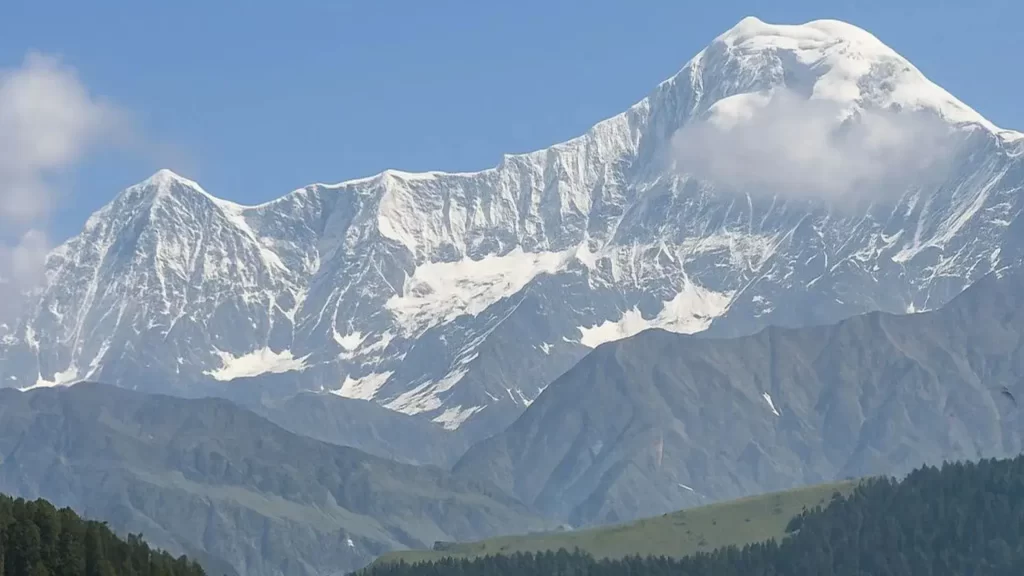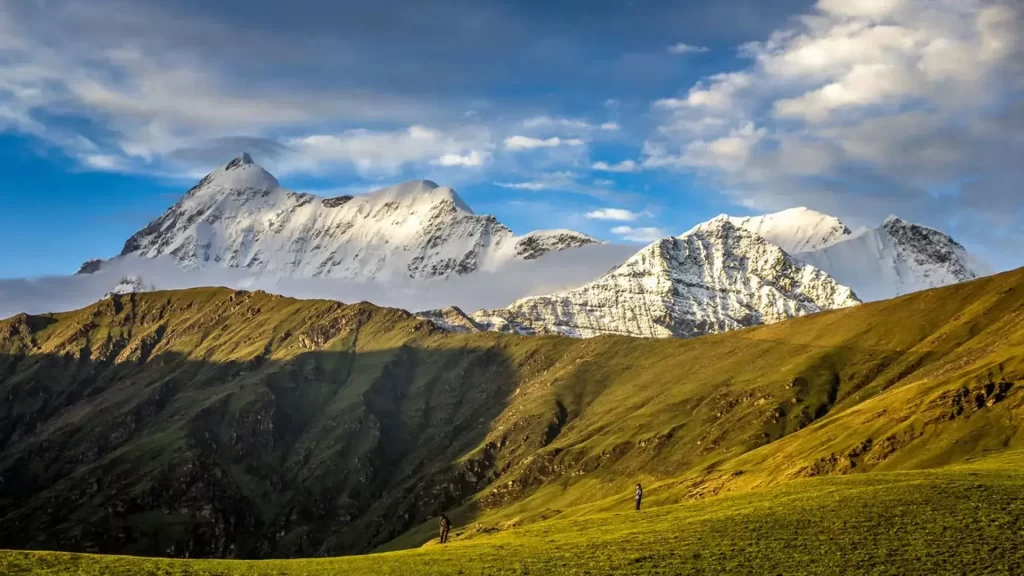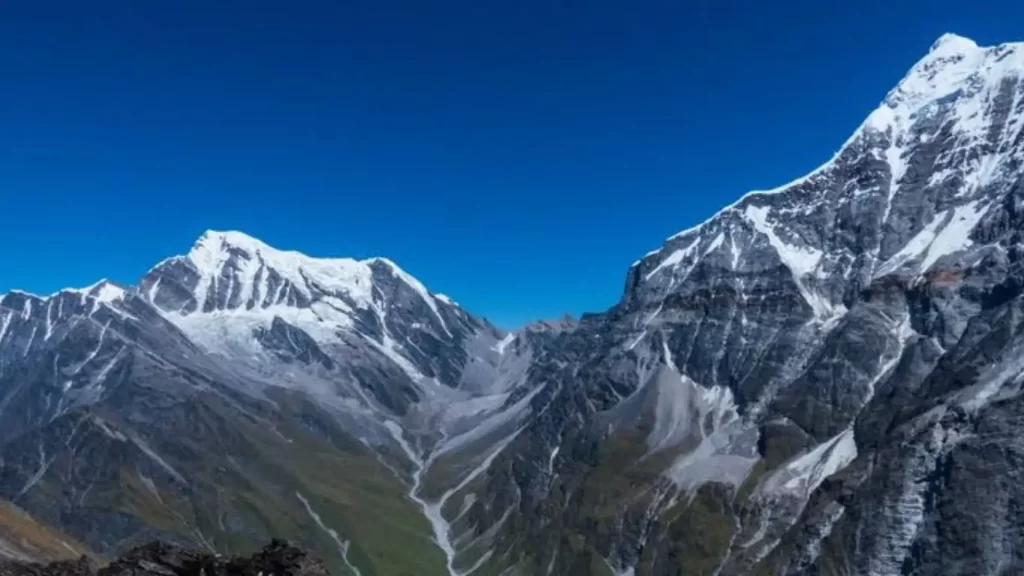

Some journeys are measured in kilometres, while others are remembered for the stories, faith, and experiences they leave behind. The Panch Kedar Yatra is one such journey through the Garhwal Himalayas of Uttarakhand, connecting five sacred temples dedicated to Lord Shiva.
Known as the Panch Kedar temples, these five shrines are Kedarnath, Madhyamaheshwar, Tungnath, Rudranath, and Kalpeshwar. Each temple has its own spiritual significance, landscape, and approach. Together, they form one of Uttarakhand’s important Shaiva pilgrimage circuits. Uttarakhand Tourism also recognizes Panch Kedar as a major tourism circuit in the state.
But the Panch Kedar Yatra is not only about temples. It takes travelers through mountain villages, forests, alpine meadows, valleys, and remote Himalayan landscapes. For many visitors, the journey becomes a combination of spirituality, nature, culture, and adventure.
What Is Panch Kedar Yatra?
Panch Kedar refers to five sacred Shiva temples located across the Garhwal Himalayas of Uttarakhand. The word “Panch” means five, while “Kedar” is associated with Lord Shiva.
The five temples of the Panch Kedar circuit are:
- Kedarnath – associated with the hump of Lord Shiva
- Madhyamaheshwar – associated with the navel or middle portion
- Tungnath – associated with the arms
- Rudranath – associated with the face
- Kalpeshwar – associated with the matted hair
The traditional sequence and routes between these temples vary according to the travel plan, road conditions, temple opening periods, and seasonal accessibility. The official Uttarakhand Tourism master plan identifies the five temples as the core of the Panch Kedar circuit.
The Story Behind Panch Kedar
According to Hindu tradition, the story of Panch Kedar is connected with the Pandavas after the Mahabharata war.
The Pandavas are believed to have wanted Lord Shiva’s blessings after the great battle. Lord Shiva, however, did not want to appear before them and took the form of a bull before disappearing into the Himalayan earth.
According to the legend, Bhima recognized the bull and tried to hold it. Lord Shiva then disappeared, and different parts of his divine form appeared at five locations in the Garhwal Himalayas.
These five sacred places later became known as the Panch Kedar temples.
The story is an important part of the spiritual identity of these temples and continues to attract pilgrims interested in the religious traditions and mythology of Uttarakhand.
The Five Panch Kedar Temples
Each of the five temples has a distinct character. Some are easily approached compared with the more remote shrines, while others require longer walks through mountain terrain.
1. Kedarnath
Kedarnath is the most widely known temple in the Panch Kedar group. Located in the Rudraprayag region at around 3,583 metres, it is also one of the twelve Jyotirlingas associated with Lord Shiva. Uttarakhand Tourism lists the temple at approximately 3,583 metres and describes the approach from Gaurikund as an uphill trek.
The temple stands in a dramatic Himalayan setting surrounded by high mountain peaks and the Mandakini valley. Because of its religious importance, Kedarnath receives pilgrims from across India and beyond.
For visitors exploring the Panch Kedar tradition, Kedarnath represents one of the most important starting points for understanding the spiritual landscape of the circuit.
2. Madhyamaheshwar
Madhyamaheshwar is located in the Garhwal region of Rudraprayag district and is traditionally associated with the middle portion or navel of Lord Shiva.
The temple stands in a peaceful Himalayan setting with views toward peaks including Chaukhamba. Uttarakhand Tourism describes Madhyamaheshwar as one of the Panch Kedar sites and notes that reaching the temple involves a substantial trek through the surrounding mountain landscape.
The journey toward Madhyamaheshwar passes through forests, villages, meadows, and changing mountain scenery. The nearby Budha Madhyamaheshwar viewpoint is also known for wide Himalayan views.
3. Tungnath
At approximately 3,680 metres, Tungnath is traditionally regarded as the highest Shiva temple in the world. It is one of the most accessible temples within the Panch Kedar group and is approached from the Chopta region.
The trail to Tungnath offers beautiful views of the surrounding Himalayan landscape. Chopta itself is known for its green meadows, forests, and mountain scenery, while the route toward Tungnath is especially popular among pilgrims and trekkers. Uttarakhand Tourism identifies Tungnath as one of the central sacred attractions around Chopta.
The temple is associated with the arms of Lord Shiva according to the Panch Kedar tradition.
4. Rudranath
Rudranath is traditionally associated with the face of Lord Shiva and is considered one of the more remote temples in the Panch Kedar circuit.
Unlike destinations with a relatively straightforward approach, reaching Rudranath involves walking through remote Himalayan terrain, forests, meadows, and mountain landscapes. This makes the journey an important part of the experience.
The quiet surroundings and limited development around the temple create a very different atmosphere from more heavily visited pilgrimage destinations.
5. Kalpeshwar
Kalpeshwar is situated in the beautiful Urgam Valley of Chamoli district and is associated with the matted locks or hair of Lord Shiva.
The temple is particularly special because it is the only Panch Kedar temple accessible throughout the year, according to Incredible India. The shrine is located in a peaceful natural setting and has a distinct cave-like character.
The surrounding Urgam Valley adds another dimension to the visit, with traditional villages, terraced fields, forests, and mountain scenery.
Panch Kedar Yatra Route
There is no single road connecting all five Panch Kedar temples. The circuit combines road journeys with walking and trekking sections, and each temple has its own approach route.
A broad geographical understanding of the circuit is:
Kedarnath → Madhyamaheshwar → Tungnath → Rudranath → Kalpeshwar
However, the actual travel sequence can change depending on the starting point, road conditions, seasonal accessibility, temple opening dates, and the travel plan.
Uttarakhand Tourism’s Panch Kedar circuit information identifies important access areas such as Ukhimath and Gopeshwar, with different branches leading toward Kedarnath, Madhyamaheshwar, Tungnath, Rudranath, and Kalpeshwar.
This is why the Panch Kedar Yatra should be understood as a circuit of five sacred destinations, rather than one continuous trekking trail.
What Makes Panch Kedar Special?
The uniqueness of the Panch Kedar Yatra comes from the combination of spirituality and Himalayan landscapes.
During the journey, travelers may experience:
- Ancient Shiva temples
- Traditional Garhwali villages
- Oak and rhododendron forests
- Alpine meadows and Bugyals
- Mountain streams and valleys
- High Himalayan viewpoints
- Local traditions and pilgrimage culture
- Quiet and remote mountain landscapes
Each temple has a different setting, which makes the overall journey more varied than visiting a single pilgrimage destination.
Panch Kedar Yatra and Himalayan Culture
The Panch Kedar region is closely connected with the culture and traditions of the Garhwal Himalayas.
Villages along these mountain routes have developed around agriculture, livestock, pilgrimage, and seasonal tourism. Traditional houses, terraced fields, local food, temples, and village customs provide visitors with an opportunity to experience a side of Uttarakhand beyond its famous tourist destinations.
Travelers should remember that these are living religious and cultural landscapes. Respecting local customs, temple rules, and village traditions is an important part of responsible travel.
Best Time for Panch Kedar Yatra
The best time for visiting the Panch Kedar region depends on the individual temple, weather, trail conditions, and annual opening and closing schedules.
For many parts of the circuit, the more favorable travel periods are generally late spring to early summer and the post-monsoon months.
Late Spring and Early Summer
The mountain landscape begins to become greener, weather conditions are generally more suitable for travel, and many pilgrimage routes become accessible after the winter period.
Post-Monsoon Season
The period after the monsoon can bring clearer Himalayan views and fresh mountain landscapes. However, weather can still change quickly at higher elevations.
Monsoon Season
July and August can bring heavy rainfall to Uttarakhand. Rain can affect mountain roads and walking trails, while landslides and slippery sections can create travel difficulties.
Because temple opening dates and local conditions can change, travelers should check current official information before planning a Panch Kedar journey.
How Difficult Is Panch Kedar Yatra?
The Panch Kedar Yatra difficulty cannot be described with one single grade because the five destinations have different approaches and terrain.
Kedarnath has a well-established pilgrimage route, while Madhyamaheshwar and Rudranath involve longer mountain walking. Tungnath has a comparatively shorter approach, while Kalpeshwar is different because of its lower elevation and year-round accessibility.
The official Uttarakhand Tourism master plan describes the Panch Kedar circuit as a pilgrimage involving trekking and notes that several of the temples are in remote areas with limited facilities.
Anyone planning to visit multiple temples should therefore be prepared for:
- Long walking days
- Uneven mountain trails
- Changes in altitude
- Changing weather
- Limited facilities in remote areas
- Steep sections on some routes
The level of preparation required depends on which temples you plan to visit and the duration of your journey.
What to Carry for Panch Kedar Yatra
A practical packing list can make Himalayan travel more comfortable.
Consider carrying:
- Comfortable trekking or walking shoes
- Warm layers
- Rain protection
- Lightweight backpack
- Reusable water bottle
- Sunglasses
- Sunscreen
- Personal medicines
- Basic first-aid supplies
- Trekking pole for longer walking sections
- Headlamp or torch
- Power bank
- Identification documents
Layered clothing is particularly useful because Himalayan temperatures can change considerably between morning, afternoon, and evening.
Responsible Travel in Panch Kedar
The Panch Kedar region is environmentally sensitive, and responsible travel is important for protecting its landscapes.
Travelers can help by following a few simple practices:
- Avoid single-use plastic whenever possible.
- Carry waste back instead of leaving it on the trail.
- Use reusable water bottles.
- Stay on established paths.
- Avoid disturbing wildlife.
- Respect temples and religious spaces.
- Follow local instructions.
- Support local homestays, guides, shops, and communities.
- Avoid unnecessary noise in peaceful mountain areas.
Responsible tourism allows future pilgrims and travelers to experience the same Himalayan landscapes without putting additional pressure on the environment.
Why Visit Panch Kedar with The Mountain Hike?
At The Mountain Hike, we see Himalayan travel as more than reaching a destination. It is about understanding the landscape, respecting local traditions, and experiencing the mountains responsibly.
Our experience across the Indian Himalayas helps us approach journeys such as Panch Kedar with attention to local conditions, mountain safety, responsible travel, and the needs of travelers.
For anyone exploring the Panch Kedar region, local knowledge can be particularly useful because the five temples are spread across different valleys and approaches rather than being connected by one simple trail.
Frequently Asked Questions About Panch Kedar Yatra
What is Panch Kedar Yatra?
Panch Kedar Yatra is a pilgrimage to five sacred Shiva temples in Uttarakhand: Kedarnath, Madhyamaheshwar, Tungnath, Rudranath, and Kalpeshwar.
Which are the five Panch Kedar temples?
The five temples are Kedarnath, Madhyamaheshwar, Tungnath, Rudranath, and Kalpeshwar.
What is the story of Panch Kedar?
According to Hindu tradition, the Pandavas sought Lord Shiva’s blessings after the Mahabharata war. Shiva appeared in the form of a bull, and different parts of his divine form are believed to have appeared at five Himalayan locations.
Which Panch Kedar temple is the highest?
Tungnath, at approximately 3,680 metres, is traditionally regarded as the highest Shiva temple in the world.
Which Panch Kedar temple is open throughout the year?
Kalpeshwar is the only Panch Kedar temple accessible throughout the year, according to Incredible India.
Is Panch Kedar Yatra difficult?
The difficulty varies between the five temples. Some approaches are relatively shorter, while others involve longer and more remote mountain trails. The overall circuit requires good preparation because of changing terrain and weather.
What is the best time for Panch Kedar Yatra?
Late spring, early summer, and the post-monsoon period are commonly considered suitable for many parts of the region, but the ideal period depends on the individual temple and its annual opening schedule.
How many temples are there in Panch Kedar?
There are five sacred temples in the Panch Kedar tradition.
Is Panch Kedar only a trekking journey?
No. Panch Kedar is primarily a religious pilgrimage circuit, but several temples require trekking or walking through Himalayan terrain. It therefore combines pilgrimage, nature, culture, and adventure.
Why is Panch Kedar important in Uttarakhand?
Panch Kedar is an important Shiva pilgrimage tradition in the Garhwal Himalayas and forms a recognized tourism circuit in Uttarakhand.
Final Thoughts
The Panch Kedar Yatra is much more than a journey between five temples. It is a passage through the spiritual and natural landscape of the Garhwal Himalayas.
From the grandeur of Kedarnath and the peaceful surroundings of Madhyamaheshwar to the high-altitude setting of Tungnath, the remote atmosphere of Rudranath, and the serene Urgam Valley around Kalpeshwar, each destination offers a different experience.
For pilgrims, the journey carries deep religious meaning. For nature lovers, it reveals the beauty of the Himalayas. And for travelers interested in culture, it offers a closer connection with the traditions and communities of Uttarakhand.
The five temples may be different in setting and approach, but together they form one remarkable spiritual journey—the Panch Kedar Yatra.