
The Story of India’s Skeleton Lake – Science, History, Folklore & Local Perspective
There are places in the Himalayas that attract trekkers because of their beauty. Then there are places that make you stop, look around and ask questions.
Roopkund is one of them.
Located high in the Garhwal Himalayas of Uttarakhand, Roopkund Lake is popularly known as Skeleton Lake because human skeletal remains have been found around its shores and can become visible when snow and ice recede.
But what makes the Roopkund Trek truly fascinating is not simply the presence of human remains. The mystery becomes deeper when science, DNA research, radiocarbon dating, local folklore, history and the geography of the Himalayas are considered together.
For someone from Wan Village, traditionally associated with the Roopkund Trek, this landscape has a meaning that goes beyond tourism. It is connected with local traditions, mountain routes, cultural memory and generations of stories.
With a background in Science and Sociology, years of Civil Services preparation and a local connection to the Roopkund region, I look at Roopkund from several perspectives—science, history, society, folklore and the Himalayan environment.
And the more we learn about Roopkund, the more interesting the mystery becomes.
Why Is Roopkund Called Skeleton Lake?
Roopkund is popularly called Skeleton Lake because numerous human skeletal remains have been discovered around the lake.
When the surrounding snow and ice melt, some of these remains can become visible, creating one of the most unusual sights associated with the Himalayas.
The remote location of the lake, the harsh high-altitude environment and the presence of human remains naturally led to many questions:
- Who were these people?
- When did they die?
- Why were they at Roopkund?
- Did they die during the same event?
- What caused their deaths?
- Were they pilgrims, travellers or members of different groups?
For decades, these questions encouraged numerous theories about the Roopkund mystery.
However, modern scientific research has shown that the answer is far more complicated than one simple explanation.
Where Is Roopkund Lake Located?
Roopkund Lake is located in Chamoli district of Uttarakhand, in the high-altitude Garhwal Himalayas.
The lake lies along a challenging Himalayan trekking route associated with Wan Village, Bedni Bugyal and Ali Bugyal.
The journey towards Roopkund passes through spectacular landscapes of forests, alpine meadows and high-altitude terrain, with impressive views of Himalayan peaks such as Trishul and Nanda Ghunti, depending on weather and visibility.
The lake itself is situated at approximately 5,029 metres (16,500 feet) above sea level.
This extreme environment is an important part of the Roopkund story. Weather can change rapidly at high altitude, and exposure to cold, wind, snow and storms can become dangerous.
The Discovery of the Roopkund Skeletons
The skeletal remains at Roopkund came to wider attention in 1942, when a British forest official discovered numerous human remains around the lake.
The discovery immediately created a mystery.
Who were the people?
How did they reach such a remote location?
And what could have caused so many deaths at such a high altitude?
Over the years, researchers examined the remains and associated objects, including footwear and other materials.
Different theories emerged.
Some suggested that the remains belonged to soldiers. Others proposed travellers, traders or pilgrims. One of the most famous explanations connected the deaths with a catastrophic hailstorm.
For many years, the idea of one large group dying in a single event became strongly associated with Roopkund.
Modern research, however, has complicated that picture.
The Local Legend of Nanda Devi
Long before modern scientific research, the region had its own explanation for the deaths.
According to a well-known local tradition, King Jasdhaval of Kannauj travelled towards the sacred region associated with Goddess Nanda Devi with his pregnant queen and a large group of attendants.
The procession is said to have behaved disrespectfully in a sacred Himalayan landscape, with celebrations and festivities taking place during the journey.
According to the legend, Nanda Devi became angry, and a devastating hailstorm struck the group.
The hailstorm is said to have killed the people travelling with the procession.
Whether the story represents a literal historical event is a separate question from its cultural importance.
From a sociological perspective, folklore can preserve a community’s understanding of nature, morality, spirituality, place and collective memory.
The Nanda Devi legend therefore remains an important part of the cultural story surrounding Roopkund, even though it should not automatically be treated as scientific evidence.
What Does Science Say About the Roopkund Mystery?
This is where the story becomes even more fascinating.
A major study published in Nature Communications in 2019 analysed ancient DNA from 38 individuals associated with the Roopkund remains.
The researchers found evidence of three genetically distinct groups.
The largest group consisted of 23 individuals with ancestry within the range of present-day South Asian populations.
A second group of 14 individuals showed ancestry associated with the eastern Mediterranean region.
There was also one individual with Southeast Asian-related ancestry.
But ancestry was only part of the discovery.
The dating evidence was even more surprising.
Radiocarbon analysis indicated that the remains did not all come from the same period.
The South Asian-associated individuals generally dated to around 800 CE, while the eastern Mediterranean-associated individuals and the Southeast Asian-related individual dated to around 1800 CE.
This suggests that the Roopkund remains represent multiple groups and different events separated by roughly a thousand years, rather than one single historical incident.
That finding significantly changed how researchers understand the mystery of Roopkund Lake.
The question is no longer simply:
“What happened to the people who died at Roopkund?”
It is also:
“Why did people from very different backgrounds reach this remote Himalayan lake at different points in history?”
Did a Hailstorm Kill the People at Roopkund?
The hailstorm theory remains one of the most intriguing explanations associated with Roopkund.
The Himalayan region around the lake is exposed to severe and rapidly changing weather. Scientific studies of some of the remains have identified traumatic injuries, including evidence that has been discussed in connection with significant impacts.
Earlier research suggested that some injuries could potentially be consistent with a severe hailstorm, although this does not provide a complete explanation for all the remains.
A catastrophic weather event at more than 5,000 metres would be extremely dangerous.
Imagine being on an exposed Himalayan route with:
- No permanent shelter
- No trees for protection
- Rapidly changing weather
- Freezing temperatures
- Strong winds
- Heavy snowfall or hail
- Limited escape options
For modern trekkers carrying technical clothing, navigation equipment and safety gear, high-altitude conditions can already be challenging.
For people travelling centuries ago, such an environment would have been considerably more difficult.
However, the evidence does not support reducing the entire Roopkund mystery to one simple hailstorm story.
What Did DNA Research Reveal About Roopkund?
The DNA research is one of the most important developments in understanding the Roopkund Lake skeletons.
Instead of revealing one single population, genetic analysis identified people with different ancestries.
The findings broadly indicated:
South Asian-Associated Group
A larger group of individuals had ancestry within the range of present-day South Asian populations and generally dated to around the eighth century CE.
Eastern Mediterranean-Associated Group
Another group showed ancestry associated with the eastern Mediterranean and generally dated to around the eighteenth century CE.
Southeast Asian-Related Individual
One individual showed Southeast Asian-related ancestry and was also dated to the later period.
The most important conclusion is that the remains were not necessarily created by one single event.
Roopkund appears to have attracted or received people from different populations and different periods.
That makes the mystery more complex—and arguably more fascinating.
Why Did People Come to Roopkund?
This remains one of the biggest unanswered questions.
If people from different regions reached the area during different periods, what brought them there?
Several possibilities can be considered, including:
- Pilgrimage
- Travel through traditional mountain routes
- Religious activity
- Group journeys
- Other historical movement through the region
However, the available evidence does not allow us to confidently assign one specific purpose to every individual found at Roopkund.
The lake is situated within a broader landscape connected with Nanda Devi traditions and pilgrimage routes, including the cultural significance of the Nanda Devi Raj Jat.
This makes the region particularly interesting from both historical and sociological perspectives.
The Sociology Behind the Roopkund Mystery
This is perhaps the aspect of Roopkund that I find most fascinating.
As a student of sociology, I do not see Roopkund only as a collection of human remains.
I see it as a meeting point of:
- People
- Migration
- Pilgrimage
- Religion
- Environment
- Folklore
- Cultural memory
The scientific evidence suggests that different groups reached the region during different historical periods.
That raises fascinating questions about how people travelled through the Himalayas centuries ago.
What motivated them?
Which routes did they follow?
How important were these mountains to communities living far beyond the immediate region?
And how did local traditions preserve memories of these landscapes?
Science can answer some questions, but it can also create new ones.
That is what makes Roopkund such an extraordinary subject for understanding the relationship between people and mountains.
Roopkund Through a Scientific Lens
My background in Science has taught me one important principle:
A fascinating story should make us curious, but evidence should determine what we believe.
It is tempting to accept the most dramatic explanation.
A mysterious lake.
Hundreds of skeletons.
A powerful goddess.
A king and his procession.
A devastating hailstorm.
Travellers from distant regions.
All of these elements create an incredible story.
But scientific evidence tells us something more complicated.
The remains do not appear to represent one homogeneous population or one single moment in history. Genetic analysis and radiocarbon dating point towards multiple groups and multiple periods.
That does not make Roopkund less mysterious.
It makes it more mysterious.
Roopkund Trek: More Than Just a Skeleton Lake
While the mystery of the lake attracts attention, the Roopkund Trek itself is an extraordinary Himalayan journey.
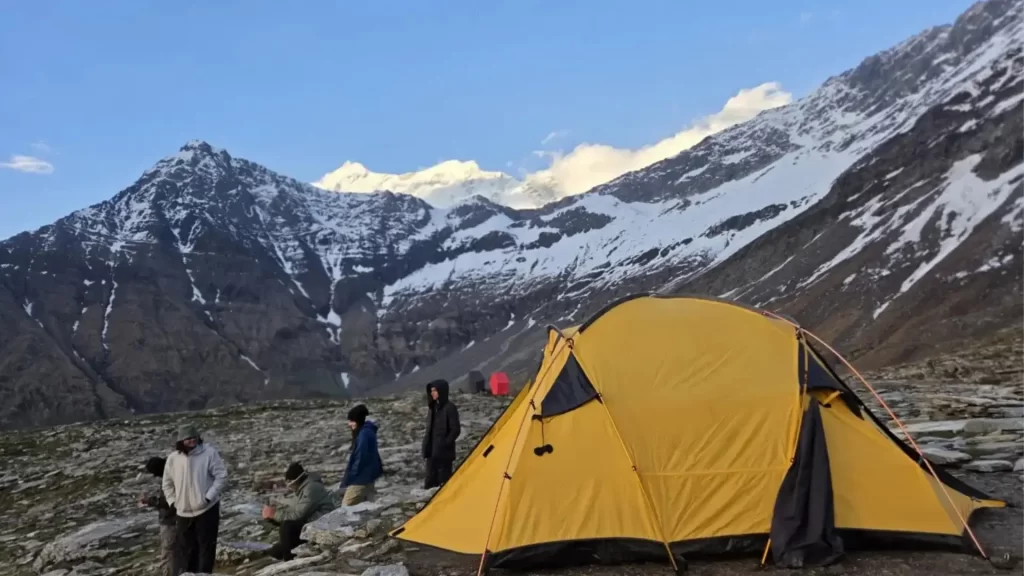
The trail passes through changing landscapes, including forests, alpine meadows, rocky terrain and high-altitude sections.
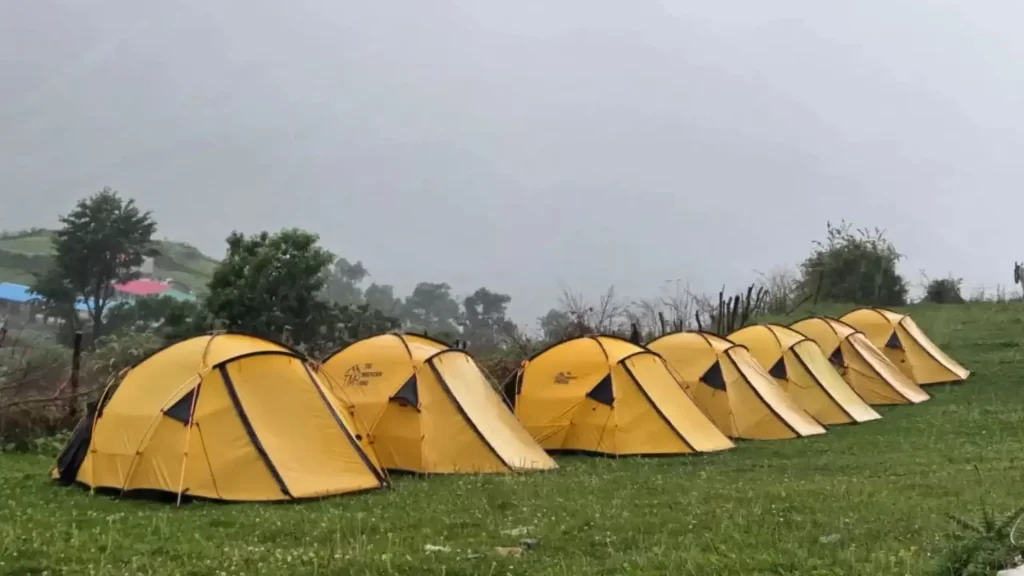
One of the highlights of the journey is the spectacular Bedni Bugyal, one of the most beautiful alpine meadow landscapes in Uttarakhand.
Trekkers also experience the surrounding Ali Bugyal, traditional mountain landscapes and impressive views of Himalayan peaks.
Depending on weather and visibility, the route provides views of peaks such as Trishul and Nanda Ghunti.
But there is something important to remember:
Roopkund is not simply a trek to a mysterious lake.
It is a journey through a landscape where nature, history, culture and human curiosity overlap.
Bedni Bugyal and Ali Bugyal on the Roopkund Trek
The alpine meadows around the Roopkund route are an important part of the trekking experience.
Bedni Bugyal offers expansive green meadows surrounded by dramatic Himalayan scenery. The landscape changes dramatically with the seasons, making it one of the memorable sections of the trek.
Nearby Ali Bugyal adds another beautiful stretch of high-altitude meadow terrain.
These landscapes are valuable not only for tourism but also for the communities and ecosystems connected with the region.
For trekkers, walking across these meadows provides a completely different experience from the dense forests found at lower elevations.
Roopkund From a Local’s Perspective
I come from Wan Village, traditionally associated with the Roopkund Trek.
For visitors, Roopkund may first appear as a mysterious destination discovered through photographs, articles and documentaries.
For local communities, however, the mountains represent something much deeper.
They are connected with:
- Traditional routes
- Local livelihoods
- Religious traditions
- Seasonal movement
- Stories passed between generations
- Knowledge of weather and terrain
Local knowledge can provide an important perspective on Himalayan landscapes.
This is why I believe trekking should not be only about reaching a destination.
It should also be about respecting the landscape and understanding the communities that have lived alongside these mountains for generations.
Is Roopkund Lake Open for Trekking?
The status and access conditions of Roopkund can change because of conservation rules, government regulations and local administrative decisions.
Therefore, trekkers should always check the latest official regulations and local guidance before planning a Roopkund Trek.
Do not assume that because a route was accessible in the past, it is automatically open today.
The ecological sensitivity of high-altitude Himalayan areas also makes responsible trekking especially important.
Is the Roopkund Trek Difficult?
The Roopkund Trek is considered a challenging high-altitude trek because of steep sections, changing weather, long trekking days and exposure to significant elevation.
Trekkers should be physically prepared for:
- Long uphill and downhill sections
- Uneven and rocky terrain
- Cold temperatures
- Rapid weather changes
- High-altitude conditions
- Reduced oxygen availability
- Demanding trail sections
Good cardiovascular fitness, strength training, proper acclimatization and appropriate equipment are important.
Because conditions can change rapidly in the high Himalayas, trekkers should never underestimate the route.
What Is the Real Mystery Behind Roopkund?
After looking at Roopkund through science, sociology, history, folklore and local knowledge, it becomes difficult to reduce the mystery to one simple answer.
Scientific research has established that:
- The remains represent different genetic groups.
- They date to different historical periods.
- The remains were not necessarily deposited during one single event.
- Some individuals had ancestry associated with regions far from the Himalayas.
- Local traditions preserve a story involving Nanda Devi, King Jasdhaval and a devastating hailstorm.
The geography of the region demonstrates how dangerous high-altitude Himalayan conditions can be.
And the archaeological and genetic evidence continues to raise questions about why people from different backgrounds reached this remote location.
So perhaps the real mystery is not simply:
“How did hundreds of people die at Roopkund?”
The deeper question may be:
“Why did people from different places and different centuries come to this remote Himalayan landscape?”
That question remains fascinating.
Responsible Trekking and Conservation at Roopkund
The mystery surrounding Roopkund has made it internationally famous, but the area is also part of a fragile Himalayan environment.
Anyone visiting the region should treat it with respect.
Follow responsible trekking practices:
- Do not disturb or remove archaeological or human remains.
- Do not litter.
- Stay on established routes where permitted.
- Avoid damaging alpine vegetation.
- Carry waste back with you.
- Respect local communities and traditions.
- Follow instructions from local authorities and trek leaders.
- Avoid collecting souvenirs from natural or cultural sites.
Roopkund should be approached as a sensitive historical and natural landscape—not simply as an adventure attraction.
Experience the Roopkund Region With The Mountain Hike
At The Mountain Hike, Roopkund represents much more than another Himalayan trekking route.
Our connection with Wan Village, traditionally associated with the Roopkund Trek, gives us a local perspective on the landscape, culture and mountain routes of the region.
For us, introducing trekkers to the Himalayas means more than helping them complete a trail.
It means helping them understand the mountains, local culture, natural environment and stories that make the journey meaningful.
We focus on responsible trekking, safety, local knowledge and respect for the Himalayan environment.
Whether your interest in Roopkund comes from its mysterious history, challenging terrain, alpine meadows or cultural significance, the journey offers an opportunity to experience a remarkable part of Uttarakhand.
Come for the mystery. Stay for the mountains. Leave with a story you will remember.
Frequently Asked Questions About Roopkund Trek
1. Why is Roopkund called Skeleton Lake?
Roopkund is popularly known as Skeleton Lake because numerous human skeletal remains have been found around the high-altitude lake.
2. What is the mystery behind Roopkund?
The mystery concerns the identity, origins, dates and possible causes of death of the people whose remains were found around the lake. Scientific research indicates that the remains represent multiple groups and different historical periods.
3. Who died at Roopkund?
Scientific research has identified individuals from different genetic backgrounds, including groups with South Asian-associated, eastern Mediterranean-associated and Southeast Asian-related ancestry.
4. Did everyone at Roopkund die at the same time?
No. DNA and radiocarbon research indicates that the remains represent different periods, with some individuals dating roughly a thousand years later than others.
5. Was a hailstorm responsible for the deaths at Roopkund?
A severe hailstorm is part of the local explanation and has also been considered in scientific discussions about some skeletal injuries. However, it should not be treated as a proven explanation for every death or every individual at the lake.
6. What did the 2019 DNA study reveal about Roopkund?
The study analysed DNA from 38 individuals and identified three genetically distinct groups, with evidence indicating different geographic ancestries and different periods of deposition.
7. Where is Roopkund Lake located?
Roopkund Lake is located in Chamoli district of Uttarakhand, in the Garhwal Himalayas, at an elevation of approximately 5,029 metres.
8. What is the Roopkund Trek famous for?
The trek is known for its high-altitude lake, Skeleton Lake mystery, Bedni Bugyal, Ali Bugyal, Himalayan landscapes and views of peaks such as Trishul and Nanda Ghunti.
9. Is Roopkund Trek difficult?
Yes. It is a challenging high-altitude route requiring good fitness, preparation, acclimatization and appropriate trekking equipment.
10. Is Roopkund Trek currently open?
Access can change because of government regulations, conservation requirements and local conditions. Always verify the latest access status before planning your trek.
11. Is Wan Village connected with Roopkund Trek?
Yes. Wan Village is traditionally associated with the Roopkund trekking route and serves as an important local gateway to the region.
12. Why is Roopkund important beyond tourism?
Roopkund is significant because it brings together scientific research, ancient DNA, history, folklore, pilgrimage traditions, local culture and Himalayan ecology.
Final Thoughts: Why Roopkund Still Fascinates Us
Roopkund teaches us that the truth is often more complex than the story we first hear.
A legend can preserve cultural memory.
Science can challenge our assumptions.
History can reveal forgotten connections.
And the mountains can keep some questions unanswered.
Perhaps that is why Roopkund continues to fascinate people decades after the skeletons first attracted widespread attention.
It is not merely India’s Skeleton Lake.
It is a place where science meets folklore, history meets society, and human curiosity meets the Himalayas.
And for someone connected with the region, Roopkund is not simply a mystery to be solved.
It is a story that deserves to be understood.
Roopkund Trek at a Glance
Location: Chamoli, Uttarakhand
Famous For: Skeleton Lake and its historical mystery
Elevation: Approximately 5,029 metres
Key Landscapes: Bedni Bugyal, Ali Bugyal and high-altitude Himalayan terrain
Nearby Peaks: Trishul and Nanda Ghunti, subject to weather and visibility
Local Gateway: Wan Village
Experience: The Mountain Hike